Closing the gender employment gap is key to a gender-equal and competitive Europe, and employers are ready to play their part.

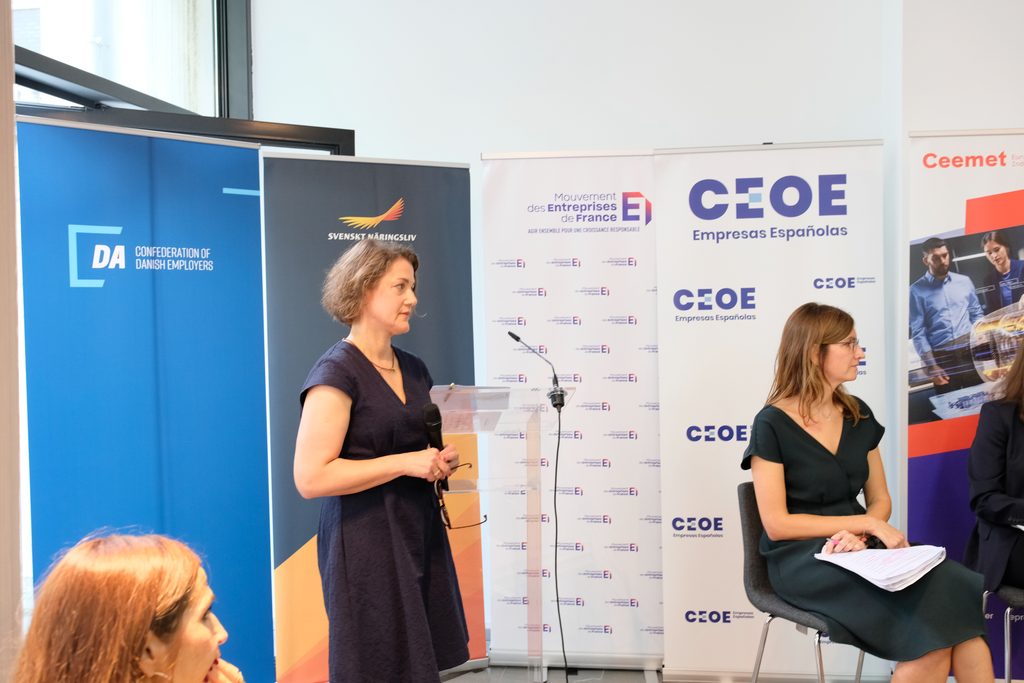
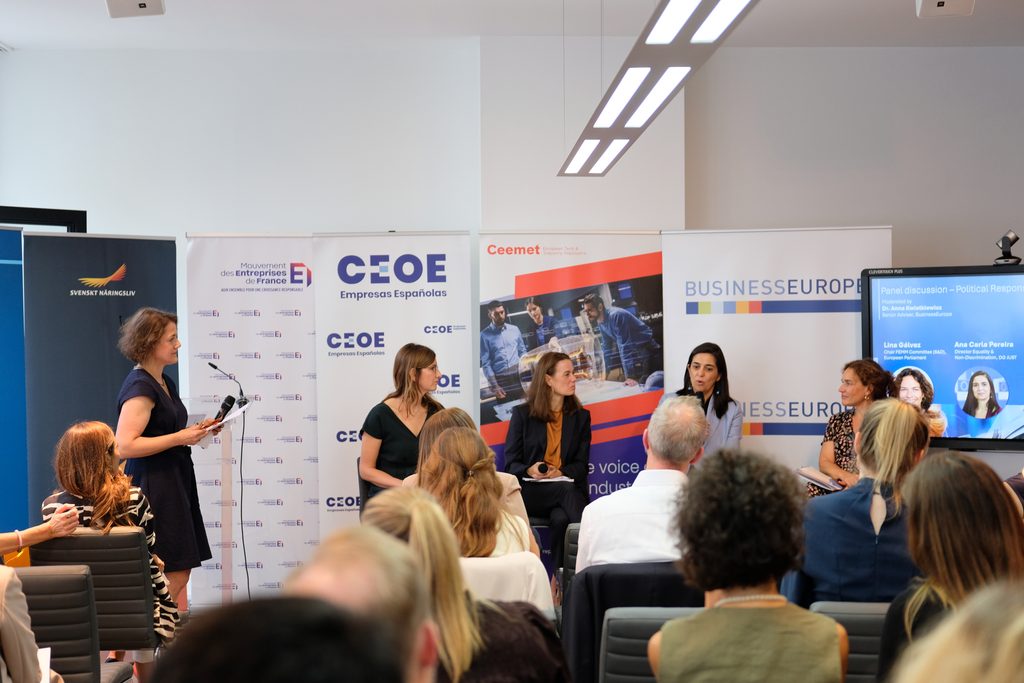
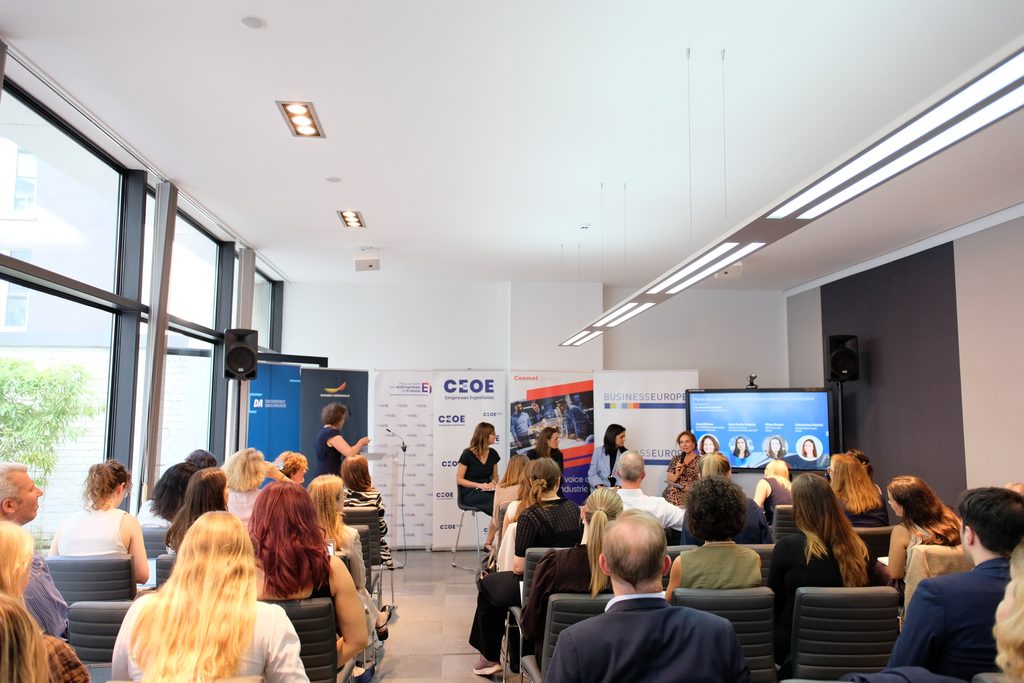
Brussels, 29 September 2026. Ceemet, together with other European and national employer organisations – BusinessEurope, Confederation of Swedish Enterprise, Mouvement des Entreprises de France, Confederation of Danish Employers and Spanish Confederation of Business Organisations (CEOE) – brought together policymakers, social partners, industry representatives and experts at the premises of CEOE in Brussels for the seminar “From Gap to Growth: Advancing women’s economic activity”. Participants shared perspectives and best practices on how employers contribute to women’s labour market participation, what drives their efforts, the challenges they face, and how the EU and the new Gender Equality Strategy can support them.
An untapped workforce at a critical moment
Europe faces major challenges that demand higher levels of economic activity, and women represent the largest untapped potential for expanding the labour force, with up to 17.3 million additional active people possible by 2030. Increasing women’s economic activity is therefore essential to both gender equality and Europe’s long-term competitiveness. For the metal, engineering and technology-based (MET) industries, already under pressure from structural labour shortages, bringing more women into work is not a side issue but a central part of securing the skilled workforce companies need.
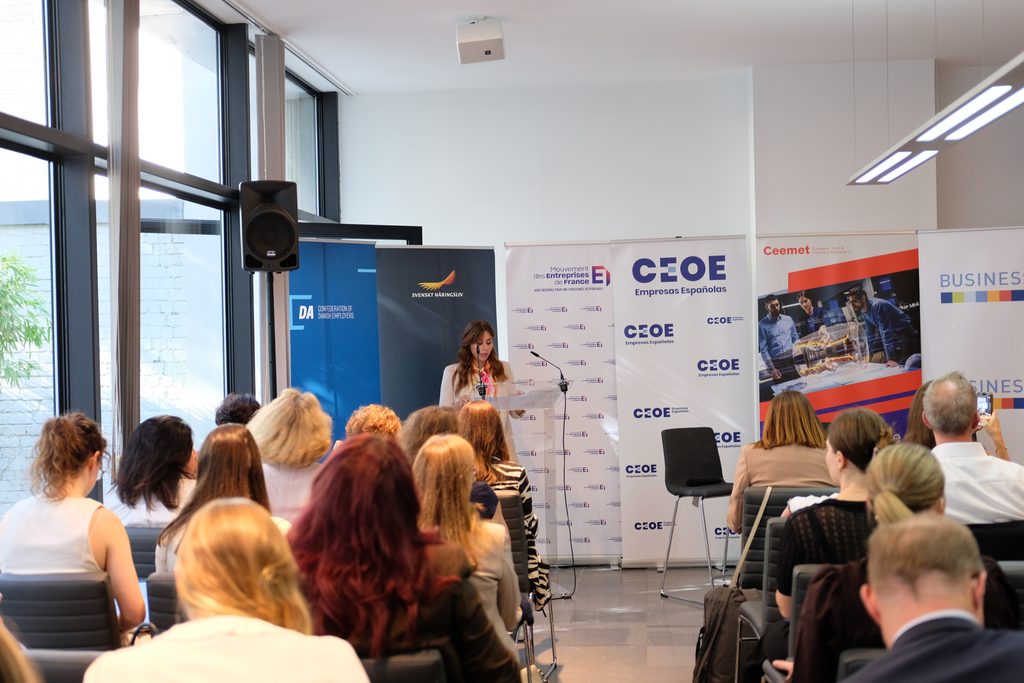
Opening the event on behalf of the host, Miriam Pinto, Head of European and International Social Affairs at CEOE, underlined the importance of moving from ambition to practical action to expand women’s participation in the labour market.
In her keynote, Barbara de Micheli, Head of the Social Justice Unit at Fondazione Giacomo Brodolini, set out the evidence behind the persistent gap. Despite women outperforming men in educational attainment, this advantage does not translate into equal labour market outcomes. Women remain more likely to work part-time, take career breaks and carry a disproportionate share of unpaid care.
As de Micheli put it, “Education is not really saving women.” She also highlighted the longer-term consequences of unequal participation: “The gender pay gap today means lower salaries today and lower pensions tomorrow.”
But she argued that Europe should not look only at the women who are already in work. “There is a potential of women who are already there, trained and competent, but are not in the labour market.” Many of the barriers, she stressed, are structural rather than individual.
Giorgia Antonucci, Adviser at BusinessEurope, then presented BusinessEurope’s priorities for strengthening gender equality, including access to affordable, quality childcare and long-term care, tackling gender stereotypes in education and career choices, removing tax and benefit disincentives to work and supporting the reconciliation of work and private life.
The economic case is equally clear, she argued. “When half of the population is effectively steered away from an entire sector, we are restricting the talent pool in exactly those sectors that are facing the highest shortages.” Addressing gender equality is therefore also about addressing Europe’s skills shortages.
Antonucci stressed that solutions cannot be delivered by legislation alone. “The solutions have to be led on the ground,” with social dialogue, sectoral initiatives and company-led action all playing a role.
Business in action
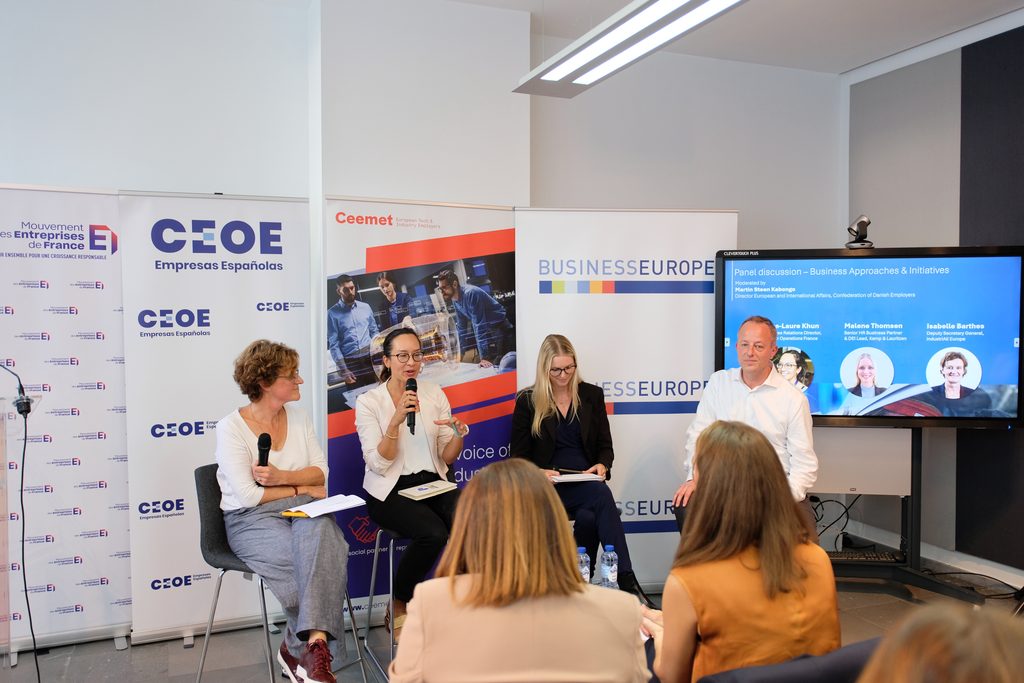
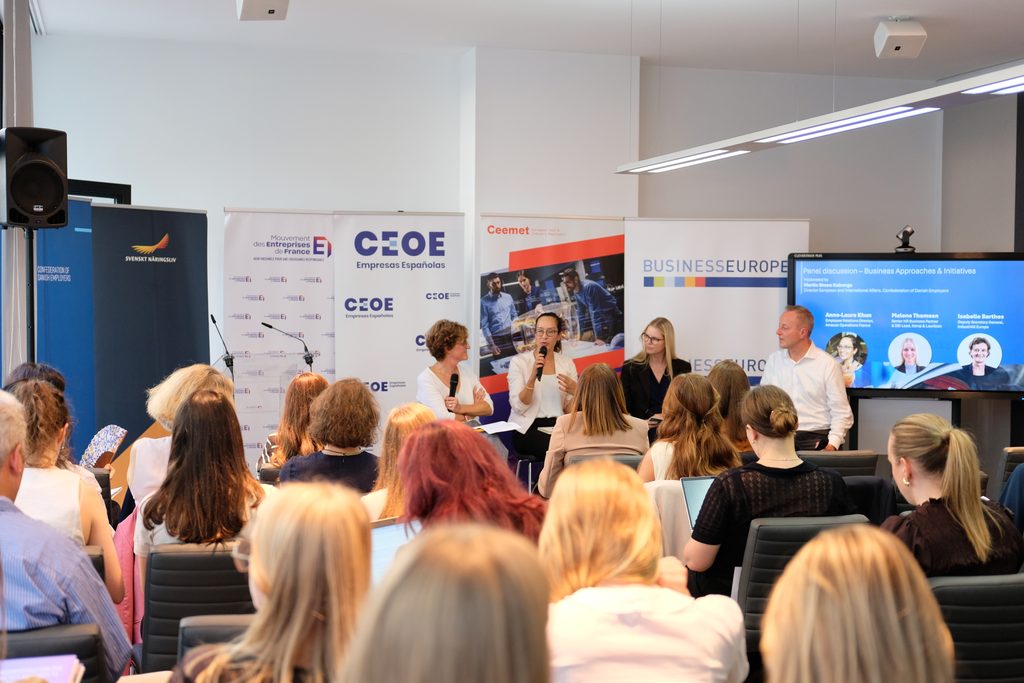
The first panel, moderated by Martin Steen Kabongo, Director of European and International Affairs at DA, showcased how companies and social partners are already working to attract, retain and advance women in traditionally male-dominated sectors.
Anne-Laure Khun, Director of Labour Relations at Amazon France, highlighted the company’s long-term efforts to increase women’s representation and develop a stronger pipeline into leadership. With women already making up around half of Amazon’s headcount outside non-executive roles, she pointed to the next challenge: “Our next challenge is how we get them into leadership functions.”
She also stressed that diversity measures need to be visible in practice. Targeted recruitment, mentoring, networking and engagement with female employees are part of a longer journey to change both representation and perceptions.
For Malene Thomsen, Senior HR Business Partner at Kemp & Lauritzen, one of Denmark’s biggest contractor companies, working in a sector where women account for less than 10% of the workforce means addressing a big scope of challenges that start long before the first day at the workplace. “We have to be visible in the schools. We have to go there, tell our stories and attract female trainees, technicians, project managers and leaders.”
But recruitment is only half of the challenge. Thomsen highlighted the importance of leadership, psychological safety and creating a sense of community for women who can otherwise find themselves as the only woman in their workplace. “Recruitment is only half of the solution. The other half is culture.”
The trade union perspective, brought by Isabelle Barthes, Deputy Secretary General of industriAll Europe, reinforced the need for action on working conditions and career progression. Attracting women into male-dominated sectors is not enough if workplaces, equipment and cultures are not designed to support them.
“The working conditions and equipment are often not adapted to women,” Barthes said, pointing to everything from personal protective equipment to workplace facilities. She also stressed that care cannot remain a predominantly female responsibility: “It’s not only about making sure that women can better reconcile work and personal care. It’s also about making sure that men take their responsibility.”
The policy response
The second panel, moderated by Anna Kwiatkiewicz, Senior Adviser at BusinessEurope, turned to the political and policy level. Lina Gálvez, Chair of the European Parliament’s FEMM Committee (S&D), Ana Carla Pereira, Director for Equality and Non-Discrimination at DG JUST, Nina Groes, CEO and Founder of Divers, and Valentina Patrini, Social Policy Analyst at the OECD, discussed how the new Gender Equality Strategy and wider EU and national policies can support change.
Gálvez stressed that the challenge is not a lack of talent, but unequal access to opportunities: “Talent is equally distributed, opportunities are not, and the time for equality is now.” She also highlighted the need to rethink how gender equality is communicated, particularly to younger men, arguing that “we are not favouring women. We are removing barriers.”
Pereira outlined several priorities from the Commission’s new Gender Equality Strategy, including care, working conditions, pay transparency, occupational segregation and women’s representation in decision-making. Care, she noted, remains one of the clearest barriers to women’s participation, with women much more likely than men to be outside the labour market because of family and care responsibilities.
She also stressed that women need to feel safe and valued at work, pointing to sexual harassment, pay structures and workplace conditions as areas requiring action. On occupational segregation, she highlighted the gap between women’s educational achievements and their labour market outcomes: “The state, the economy collectively, has invested in the skills of women, and then somehow we lose that investment somewhere in the pipeline.”
Nina Groes from Divers brought the discussion back to practical experience from some of Europe’s most gender-segregated sectors. Her organisation works with employers, trade unions, vocational education providers and more than 200 companies to change both recruitment and workplace culture. “Nobody can create change alone,” she said.
She highlighted barriers that can appear surprisingly basic, from safety shoes and workwear designed around male workers to a lack of changing facilities and even toilets for female students in vocational education. “It’s very concrete, but of course it sends a message that you are like a guest in your own workplace.”
Valentina Patrini brought the OECD‘s comparative evidence into the discussion, stressing that gender equality policy needs to look beyond individual measures and across women’s working lives. The gender earnings gap, she noted, is considerably wider than the headline gender pay gap because differences in career interruptions, working hours and wages accumulate over time.
She also highlighted parental leave, childcare and tax systems as key parts of the wider ecosystem supporting women’s employment, stressing that “when we talk about gender equality policy, it’s not policies for women. It’s policies that should really involve men equally.”
Employers’ message: many levers lie beyond the workplace
A recurring theme throughout the afternoon was that while employers play a vital role in bringing women into the labour market, many of the factors shaping outcomes lie beyond their control.
Ceemet has long argued that tackling labour shortages requires investment in active labour market policies, with bringing women into and back to the labour market at the heart of that agenda. The discussion reinforced that unlocking women’s full economic potential will require coordinated action across care, education, taxation, skills, workplace conditions and social dialogue.
The message from employers was not simply for more participation, but for fewer barriers to participation. As Giorgia Antonucci put it, “This isn’t just a fairness issue, it’s an efficiency issue.”
“Europe cannot afford to leave millions of skilled women on the sidelines while our industries struggle to fill vacancies. Our member companies are already investing in flexible work, skills and inclusive workplaces because they know it makes them stronger. But employers cannot do it alone: access to quality care and education that opens technical careers to girls are decisions taken elsewhere. What we need from the EU and Member States is to remove these barriers, not add new administrative burdens. Closing the gap is not only about fairness, but also about sustaining Europe’s competitiveness.” – Delphine Rudelli, Director General, Ceemet
The event concluded with a networking session, giving participants the opportunity to exchange on this topic more informally.